
The Post-Race Cold Isn't What You Think It Is
How gut barrier disruption — not a virus — may be making endurance athletes sick after their biggest efforts
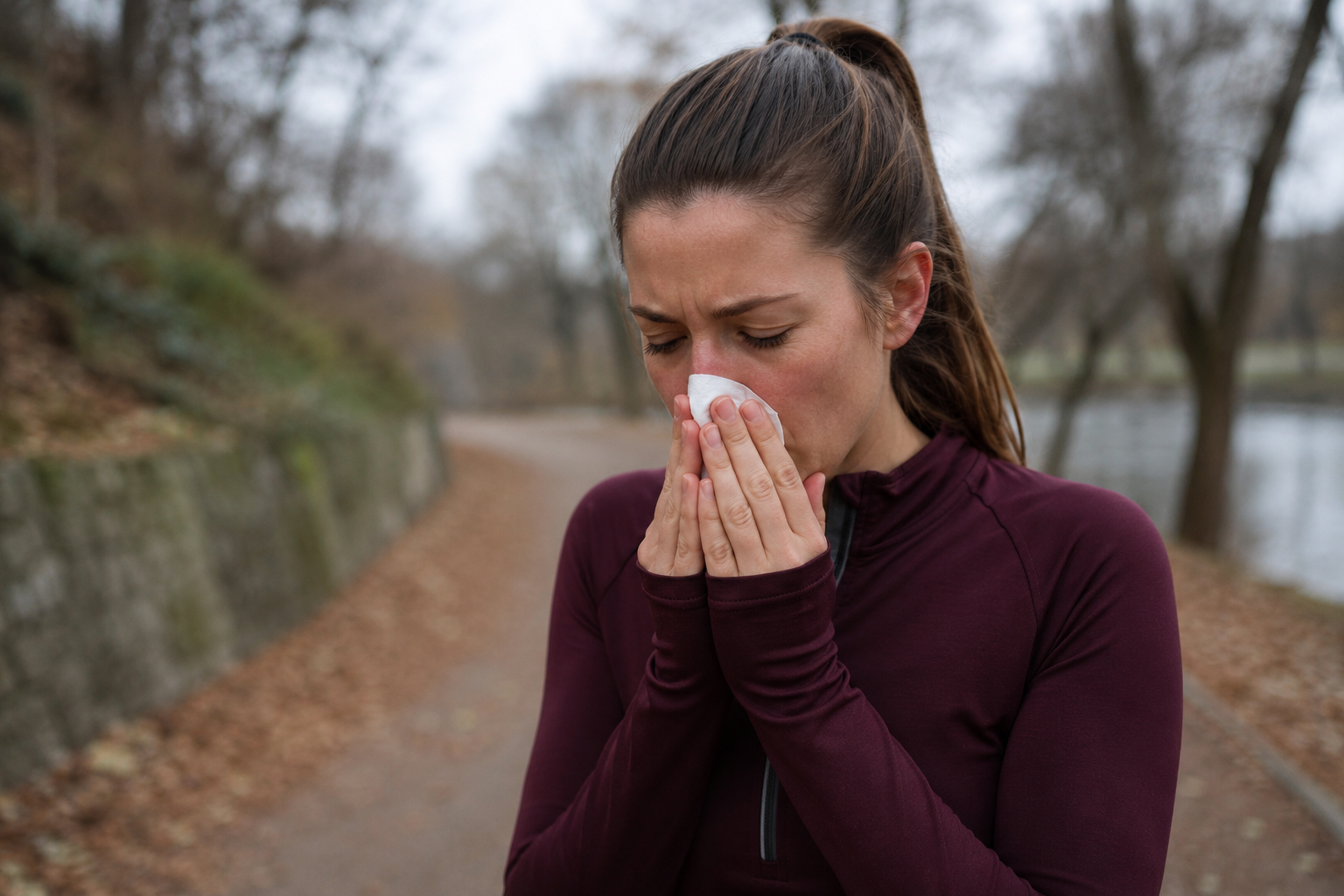
You trained for months. You ran the race. You crushed it. Then two days later you're in bed with a sore throat, chest congestion, and a cough that won't quit. You tell everyone you caught a cold at the finish line.
But what if you didn't?
What if the illness you experience after your hardest efforts has nothing to do with a pathogen — and everything to do with what happens to your gut during and after prolonged endurance exercise?
The Conventional Explanation Falls Short
The standard explanation for post-race illness centers on exercise-induced immune suppression. The theory goes like this: sustained cortisol and adrenaline during a hard effort temporarily lower immune defenses, opening a window for viruses to take hold. This open window hypothesis has been taught to coaches and athletes for decades.
It's not wrong. But it's incomplete.
Research published in the Journal of Applied Physiology has demonstrated that secretory IgA — your mucosal immune system's first line of defense — does drop significantly in the hours following prolonged endurance exercise (Gleeson et al., 2004). That part is real.
What the open window hypothesis doesn't fully explain is why the illness symptoms so often appear in the absence of any confirmed pathogen, why they correlate more strongly with post-race eating behavior than with crowd exposure, and why athletes with better gut health and cleaner post-race nutrition consistently get sick less often regardless of race conditions.
The missing piece is your gut.
What Actually Happens to Your Gut During a Hard Effort
Prolonged endurance exercise creates a predictable and significant disruption to intestinal barrier integrity. During sustained effort, blood is shunted away from the gastrointestinal tract toward working muscles — gut blood flow can drop by as much as 80% during intense exercise (Qamar and Read, 1987). This ischemia, combined with mechanical impact, heat stress, and dehydration, compromises the tight junctions between intestinal epithelial cells.
The result is increased intestinal permeability — colloquially called leaky gut — that allows lipopolysaccharide (LPS), a component of the outer membrane of gram-negative gut bacteria, to translocate from the intestinal lumen into systemic circulation.
This is the trigger that changes everything.
Research published in the American Journal of Physiology confirmed significant LPS translocation into circulation during and after endurance events, with markers of intestinal permeability elevated for hours post-exercise (Costa et al., 2017). A study specifically examining marathon runners found measurable increases in plasma LPS and intestinal fatty acid binding protein — a direct marker of gut barrier damage — immediately following race completion (Maes et al., 2017).
Your gut is leaking. And what leaks through triggers your immune system as if you've been invaded.
Why LPS Makes You Feel Like You Have the Flu
Here is the mechanism that explains everything.
LPS is recognized by toll-like receptor 4 (TLR4) on immune cells throughout your body. When TLR4 detects LPS it initiates the same inflammatory cascade triggered by an actual bacterial infection — because evolutionarily speaking, LPS in the bloodstream meant exactly that.
The cascade releases interleukin-6 (IL-6), interleukin-1 beta (IL-1β), and tumor necrosis factor alpha (TNF-alpha). These cytokines are responsible for what researchers call sickness behavior — a coordinated response that produces fatigue, appetite suppression, cognitive fog, social withdrawal, heightened pain sensitivity, and a powerful drive to sleep (Dantzer et al., 2008).
These are identical molecules to what circulates during a genuine viral infection. Your brain receives the same signals and generates the same experience. The symptoms are real. The immune response is real. The pathogen is not.
The gut-lung axis completes the respiratory picture. Your gut and lung share embryological origin and maintain direct immune communication via cytokine signaling and the vagus nerve. When gut inflammation signals travel this pathway, your airway mucosa responds as if under direct respiratory threat — producing mucus as a physical barrier against an invader that isn't there. The result is the congestion, cough, and chest symptoms that convince athletes they've caught a respiratory bug.
The Post-Race Nutrition Window Makes It Worse
Here's where athlete behavior amplifies the problem.
The gut barrier is maximally compromised immediately after a prolonged effort. This is precisely the window when most athletes eat their worst food of the entire training cycle — finish line pizza, bagels, sports drinks loaded with artificial ingredients, and often alcohol at the celebration that follows.
Processed foods, refined carbohydrates, industrial seed oils, and alcohol all independently increase intestinal permeability and histamine load. Piling them onto a gut that is already leaking is the equivalent of pouring accelerant on a fire.
Research on dietary patterns and gut permeability consistently shows that high fat, high sugar processed meals acutely worsen tight junction integrity in the hours following consumption (Pendyala et al., 2012). Alcohol is particularly damaging — even moderate consumption significantly increases LPS translocation and systemic endotoxemia (Parlesak et al., 2000).
The athlete who finishes a marathon and celebrates with beer and pizza isn't just eating poorly. They are actively amplifying a gut-driven inflammatory cascade that will feel like a cold by Tuesday morning.
There is also the timing issue. Post-exercise appetite suppression is real — cortisol and sympathetic nervous system activation blunt the hunger signal for 60-90 minutes after a hard effort. Many athletes eat before that signal returns, placing significant food demands on a gut that hasn't yet transitioned back into parasympathetic digestive readiness. Eating before hunger returns post-effort means eating before the gut is ready to receive food.
The Epidemiological Clue Nobody Talks About
If post-race illness were primarily infectious you would expect clusters. Athletes who shared the finish line, the changing tents, the post-race party — they would get sick together with similar timing. Contact tracing would implicate shared exposure.
That's not the pattern we observe. Post-race illness is individual, variable in timing, and correlates far more strongly with training load, gut health history, and post-race behavioral choices than with any identifiable shared exposure. Some athletes never get post-race illness despite racing in the same conditions year after year. Others get it almost every time regardless of the season.
The difference is far more likely gut health and recovery nutrition than viral luck.
What You Can Do About It
The good news is that if this mechanism is correct — and the evidence strongly suggests it is — post-race illness is largely preventable through targeted intervention. The protocol has three phases: preparation before the effort, protection during it, and deliberate recovery after.
Before the race — build the barrier:
Build gut health in the weeks leading into your event. Probiotic supplementation has been shown to reduce intestinal permeability markers and upper respiratory symptom incidence in endurance athletes (Haywood et al., 2014). Fermented foods, prebiotic fiber, and reduced processed food intake all strengthen the gut barrier you'll be relying on race day. Reduce processed food in the 48-72 hours before the event specifically — don't arrive at the start line with an already-burdened gut. Stay well hydrated going in — dehydration independently worsens gut ischemia during sustained effort. And avoid NSAIDs before and during the effort — as discussed below, they independently increase intestinal permeability and amplify the very problem you're trying to prevent.
During the effort — protect what you built:
Fuel consistently with clean carbohydrates — don't let yourself become severely depleted, as gut ischemia worsens proportionally with dehydration and glycogen deficit. Prioritize hydration throughout. Where possible choose real food over highly concentrated synthetic gels for longer efforts — whole food sources are easier on already-stressed gut mucosa.
Immediately post-effort — the critical window:
Get clean simple carbohydrates in within 30 minutes of finishing — before gut permeability worsens further. This doesn't mean finish line pizza. This means banana, rice cakes, a clean sports drink, or a prepared recovery food you brought yourself. Stay upright and moving — do not go horizontal and sleep immediately after eating. Digestion requires parasympathetic tone, blood flow, and motility. A nap taken right after a post-race meal freezes the digestive process mid-stream and leaves the gut in a maximally compromised state.
Wait for hunger before your real meal: The return of genuine appetite is a biological signal that parasympathetic tone has been restored and your gut is ready to receive food. Eating before that signal on a compromised gut amplifies the problem. Even 30-45 additional minutes of patience changes the outcome significantly.
Choose your recovery meal deliberately: Clean protein, easily digestible carbohydrates, anti-inflammatory fat. Grilled chicken and white rice. Pasta with olive oil. Foods that support rather than challenge a recovering gut barrier. The single highest-leverage practical strategy is preparing this meal before you leave for the race — have it waiting in the refrigerator so that when you return depleted and hungry, the right answer requires zero willpower or decision-making. Decision fatigue is real after a hard effort. Remove the decision entirely.
Supplement protocol surrounding hard efforts:
N-Acetylcysteine (NAC): 600mg twice daily in the 48-72 hours surrounding a major event replenishes glutathione, supports gut and airway mucosal integrity, and has direct mucolytic properties if respiratory symptoms do develop (Moretti et al., 2007).
Quercetin: Daily supplementation reduces upper respiratory symptom incidence in athletes and has a proposed mechanism involving reduction of exercise-induced gut permeability — making it useful both before and after hard efforts (Nieman et al., 2007).
Omega-3 fatty acids: Daily ongoing supplementation shifts prostaglandin balance toward pro-resolving mediators, reducing the magnitude of the post-exercise inflammatory response over time.
Medicinal mushrooms: Reishi and turkey tail taken daily provide ongoing immune modulation and gut microbiome support — building the baseline resilience that determines how hard any single inflammatory insult hits.
Magnesium glycinate: Supports sleep quality, which is your most powerful recovery tool. Poor sleep after a hard effort dramatically extends the inflammatory clearance window.
Skip the celebration alcohol: At minimum wait 24-48 hours. Alcohol's effect on LPS translocation in an already-permeable post-race gut is significant and well-documented. The celebration will still be there in two days.
Sleep before socializing: One night of quality sleep before the celebration does more for your immune system than any supplement. The cytokine resolution that prevents a full inflammatory cascade happens primarily during deep sleep. Sleep first. Celebrate second. The podium photo will look better anyway.
The Anti-Inflammatory Instinct — And Why It Can Backfire
When athletes feel sick they reach for ibuprofen, naproxen, or aspirin. It's intuitive — you're inflamed, anti-inflammatories reduce inflammation, problem solved.
Except that's not quite how it works in this context. And getting it wrong can actually extend your recovery rather than shorten it.
Inflammation in a gut-driven illness response is not the enemy. It is the mechanism of resolution. Your immune system uses the inflammatory cascade to clear LPS from circulation, repair tight junction proteins in the gut barrier, and restore mucosal integrity in the airways. Broadly suppressing that process with NSAIDs doesn't accelerate healing — it interrupts it.
There is a deeper problem specific to athletes. NSAIDs independently increase intestinal permeability. Research on endurance athletes has shown that ibuprofen taken before or during exercise significantly worsens gut barrier damage compared to exercise alone (van Wijck et al., 2012). Taking NSAIDs prophylactically before a hard effort — a common practice among distance runners — may be actively amplifying the gut barrier disruption that triggers the post-race illness cascade in the first place.
The athlete who finishes a marathon, feels rough, takes ibuprofen, and wonders why they're still sick five days later may be caught in exactly this loop.
The distinction that matters: suppress versus modulate
Suppressing inflammation means blocking the cascade entirely — blunting both the damaging and the resolving aspects of the immune response simultaneously. This is what NSAIDs do.
Modulating inflammation means directing and regulating the immune response — reducing excessive or misdirected inflammatory signaling while preserving the resolution pathways the body needs to actually heal. This is what targeted natural compounds do, and the difference in recovery outcomes is meaningful.
Several compounds with strong research support work as inflammation modulators rather than suppressors:
Quercetin selectively modulates NF-kB pathway signaling and inflammatory cytokine production without blocking prostaglandin synthesis entirely. Research shows quercetin supplementation reduces upper respiratory symptom incidence in athletes specifically, with a proposed mechanism involving reduction of exercise-induced gut permeability (Nieman et al., 2007).
Curcumin modulates the same NF-kB pathway with demonstrated effects on IL-6 and TNF-alpha without the gut barrier side effects of NSAIDs. Bioavailability is the practical consideration — formulations with piperine or phospholipid complexes are significantly more effective than standard curcumin powder.
Omega-3 fatty acids shift prostaglandin production toward Series 3 prostaglandins — which are pro-resolving rather than pro-inflammatory — rather than blocking prostaglandin synthesis entirely. This is a fundamentally different mechanism that supports resolution rather than suppression.
N-Acetylcysteine (NAC) replenishes glutathione — the primary antioxidant defense in both gut epithelial cells and airway mucosa — without touching the inflammatory cascade directly. It also has direct mucolytic properties that thin and mobilize airway mucus, making it particularly useful when respiratory symptoms are present.
Medicinal mushrooms — particularly reishi and turkey tail — contain beta-glucans that interact with immune cell receptors to regulate rather than suppress immune activity. They help the immune system recognize when the threat has been cleared and stand down appropriately, reducing the duration of the inflammatory response without blocking it prematurely.
When NSAIDs are appropriate
This is not an argument against NSAIDs categorically. If pain or fever is significant enough to prevent sleep, a single low dose to enable quality rest is a reasonable tradeoff — because sleep is the most powerful recovery tool available and losing it to discomfort costs more than the NSAID does. The key distinction is strategic occasional use versus reflexive daily dosing through the recovery window.
The athlete who modulates rather than suppresses — who uses quercetin, NAC, omega-3s, and targeted mushroom compounds instead of reaching immediately for ibuprofen — will typically experience a longer initial symptom window but a cleaner, faster total resolution. The inflammation is allowed to do its work under guidance rather than being shut down before the job is finished.
Feel worse briefly. Heal faster completely. That's the tradeoff worth understanding.
The Bottom Line
The post-race cold that endurance athletes accept as an inevitable cost of big efforts may not be a cold at all. It may be a gut-driven inflammatory response — real symptoms from real biology, generated through LPS translocation, cytokine signaling, and gut-lung axis activation rather than any pathogen.
Your immune system doesn't distinguish between a virus and a significant gut insult. It only speaks the language of danger signals. Give it the same signals and it generates the same response.
The athletes who never get post-race illness aren't luckier with viral exposure. They likely have stronger gut barrier integrity going in, cleaner post-race nutrition coming out, and behavioral choices that don't amplify an already-stressed system at its most vulnerable moment.
Train the gut like you train the legs. What you put in that finish line window matters as much as anything you did in the months before it.
References
Costa, R.J.S., et al. (2017). Gut-barrier function during prolonged exercise and its relationship to exercise intensity. American Journal of Physiology — Gastrointestinal and Liver Physiology.
Dantzer, R., et al. (2008). From inflammation to sickness and depression: when the immune system subjugates the brain. Nature Reviews Neuroscience, 9(1), 46-56.
Gleeson, M., et al. (2004). Mucosal immunity and respiratory illness in elite athletes. Journal of Applied Physiology.
Haywood, B.A., et al. (2014). Probiotic supplementation reduces the duration and incidence of infections but not severity in elite rugby union players. Journal of Science and Medicine in Sport, 17(4), 356-360.
Maes, M., et al. (2017). Increased intestinal permeability and tight junction protein alterations in marathon runners. Brain, Behavior, and Immunity.
Moretti, M., et al. (2007). The role of N-acetylcysteine in the management of COPD and chronic bronchitis. Therapeutic Advances in Respiratory Disease.
Parlesak, A., et al. (2000). Increased intestinal permeability to macromolecules and endotoxemia in patients with chronic alcohol abuse in different stages of alcohol-induced liver disease. Journal of Hepatology, 32(5), 742-747.
Pendyala, S., et al. (2012). A high-fat diet is associated with endotoxemia that originates from the gut. Gastroenterology, 142(5), 1100-1101.
Qamar, M.I., and Read, A.E. (1987). Effects of exercise on mesenteric blood flow in man. Gut, 28(5), 583-587.
Nieman, D.C., et al. (2007). Quercetin reduces illness but not immune perturbations after intensive exercise. Medicine and Science in Sports and Exercise, 39(9), 1561-1569.
van Wijck, K., et al. (2012). Exercise-induced splanchnic hypoperfusion results in gut dysfunction in healthy men. PLOS ONE, 7(2).