
Built for the Long Haul: Why Women Can Compete With Men at the Highest Level of Ultra Endurance Sport
By JS Performance Lab | May 6, 2026
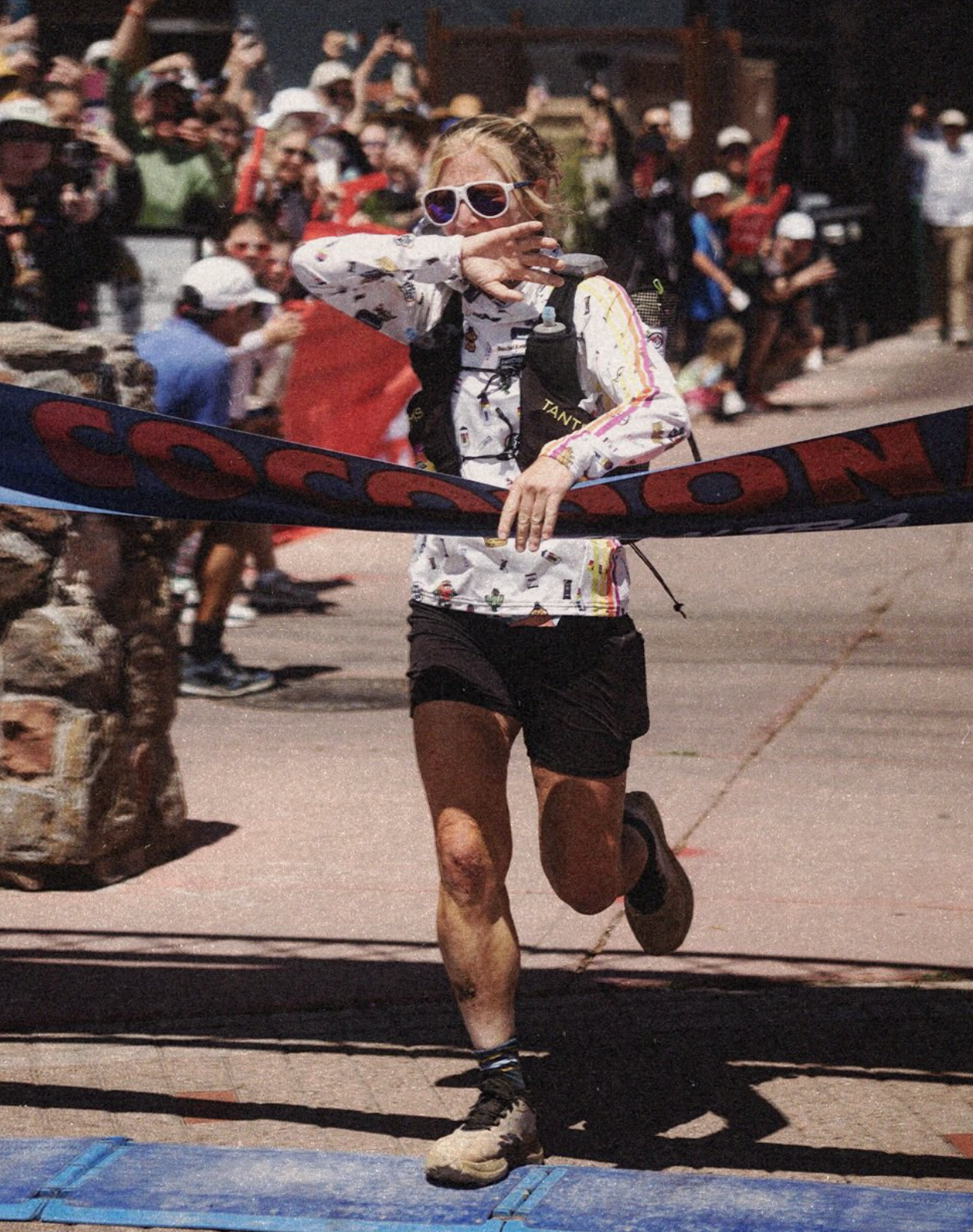
On May 6, 2026, Rachel Entrekin crossed the finish line in downtown Flagstaff, Arizona, and quietly rewrote the history of ultrarunning. The 34-year-old from Madison, Alabama became the first woman to ever win the Cocodona 250 outright — not just the women's division, but the entire race — finishing in 52 hours and 32 minutes (a few finish times have been posted, but 52 hours and 32 minutes is based on the official moving time (1d23h52m) + stopped time (4h40m) from the results page). She did it against a stacked field that included ultrarunning legend Courtney Dauwalter, elite triathlete-turned-ultrarunner Heather Jackson, and Triple Crown 200-miler champion Kilian Korth. Race organizers called it one of the most dominant performances in ultrarunning history.
It wasn't a fluke. Entrekin had been the women's champion in 2024, shattered the women's course record in 2025 by seven hours, and in 2026 simply ran past every competitor, male and female, with relentless efficiency across 253 miles of Arizona desert, mountains, and red rock. She led from early in the race, withstood Korth closing to within minutes mid-race, and then pulled away so decisively in the final 50 miles that there was never any doubt.
Entrekin's performance raises a question that sports scientists have been circling for years: Why is it that as races get longer, women close the gap — and sometimes surpass — men entirely?
The answer is not one thing. It is five converging advantages that become more pronounced with every additional mile.
1. Superior Fat Oxidation: Women's Metabolic Engine
The single most important fuel source in multi-day ultra events is fat — and women burn it far more efficiently than men. Research consistently shows that women exhibit up to 56% higher fat oxidation rates than men during prolonged exercise. This isn't just a marginal advantage; it's a mechanistic one. Women have higher protein content of the enzymes responsible for long- and medium-chain fatty acid oxidation in skeletal muscle (NCBI/PMC), meaning the machinery for burning fat is literally more abundant at the cellular level.
Estrogen, the dominant female sex hormone, is largely responsible. It promotes fat metabolism and, critically, glycogen conservation — the ability to preserve stored carbohydrate for when it is most needed (high-effort climbs, technical terrain, late-race surges). In a 250-mile event where glycogen stores deplete and replenish repeatedly over three days, the athlete who can spare those stores and rely on fat for the vast majority of steady-state movement has a significant structural advantage. Men's greater reliance on glycogen makes them more vulnerable to bonking, energy crashes, and the dreaded "hitting the wall" — phenomena women are biologically less prone to.
For coaches and athletes, this is not abstract theory. It is the metabolic explanation for why Entrekin was moving smoothly at mile 200 while her male rivals were spending extended time in aid stations managing fatigue.
2. Slow-Twitch Muscle Dominance: Built to Last
Not all muscle is created equal, and women's musculature leans in the direction that ultra events reward most. A meta-analysis of over 110 studies found that women generally possess a higher proportion of Type I (slow-twitch) muscle fibers than men. These fibers are dense with mitochondria, highly vascularized, and fatigue-resistant — the biological definition of endurance machinery.
Men, by contrast, tend to carry more Type II (fast-twitch) fibers. These produce explosive power and are ideal for sprinting and short-duration high-intensity efforts. But they come with a trade-off: they fatigue faster, and when present in high density, they can actually restrict blood flow by compressing nearby arteries — reducing oxygen delivery precisely when sustained effort demands more of it (DLA Piper, 2025).
In a 100-meter race, this works in men's favor. In a 100-mile race — let alone a 250-mile one — slow-twitch fiber dominance becomes a compounding asset. Women's muscles, at a structural level, are designed for exactly the kind of sustained, repetitive, moderate-output effort that defines ultra endurance sport.
3. Pacing Intelligence: The Strategic Advantage
Here is where physiology and psychology intersect. Studies consistently show that women adopt more conservative and consistent pacing strategies compared to men, who are statistically more likely to go out hard and pay for it later. This isn't just personality — it appears to be partly hormonal, partly psychological, and clearly evidenced in race outcomes.
At events like UTMB, Spartathlon, and multi-day desert races, women are more likely to display even splits, maintain their performance through the back half of the race, and avoid the catastrophic slowdowns that end men's races. The metabolic efficiency of fat oxidation, promoted by estrogen, allows female athletes to sustain pace more consistently without "hitting the wall" (Biology Insights, 2025).
Entrekin's race is a textbook example. She spent five minutes at the Sedona aid station at mile 156. Her nearest rival took significantly longer. She spent 20 minutes at Munds Park at mile 190 — and that became the longest stop of her race. She ran conservatively enough early that her body had something left for the final 50 miles, where she extended her lead from minutes to hours. Pacing, in ultra endurance, is strategy — and women appear to be better at it.
4. Psychological Resilience and Pain Tolerance
A 2025 review in Sports Medicine (Paley & Johnson, University of Leeds) examined pain coping strategies in elite ultra endurance athletes, finding that elite performers demonstrate "genetic predispositions, physiological conditioning and psychological resilience" that allow them to tolerate prolonged and severe discomfort. Research in sports psychology further highlights women's superior ability to modulate pain sensitivity, maintain focus, and stay motivated during lengthy and grueling competitions.
Women's emotional resilience — their capacity to reframe suffering, maintain psychological composure under extreme fatigue, and sustain motivation through difficulty — appears to be a competitive variable in events that last two, three, and four days. The diaphragm and respiratory muscles of women also show less fatigue than men's under prolonged exertion, which means women can sustain aerobic breathing efficiency deeper into a race.
At mile 234 of the Cocodona, Entrekin took a five-minute pit stop, refueled, changed, applied sunscreen, and headed toward 9,000-foot Elden Mountain with what observers described as composed, purposeful movement. Korth, her nearest rival, stopped to take ibuprofens. The psychological gap was as visible as the physical one.
5. Reduced Inflammation and Faster Recovery Between Efforts
In multi-day ultra events, the ability to recover between efforts — between one night's running and the next day's climbing — is as important as raw fitness. Here again, women carry a physiological edge. Research shows that women exhibit reduced muscle damage and systemic inflammation during prolonged exercise, allowing faster recovery from sustained efforts (DLA Piper, 2025).
Estrogen plays a protective role in muscle tissue, reducing the cellular damage that accumulates with repeated high-stress contractions. Women's higher body fat percentage, often framed as a disadvantage in speed sports, also contributes to better thermoregulation in hot conditions — a critical factor in a race crossing Arizona's desert terrain in early May. The ability to manage core temperature more efficiently reduces the physiological burden of racing in heat, preserving energy that men may be spending simply to stay cool.
Combined, these recovery advantages mean that in a three-day, 253-mile race, women like Entrekin don't just maintain — they can strengthen their position relative to men as the race unfolds.
What This Means
Entrekin's Cocodona win is not an anomaly. It is a data point in a growing pattern. As race distances increase beyond the marathon, the performance gap between male and female athletes narrows. In the most extreme events — those exceeding 200 miles — women have occasionally won outright. The physiology behind this is now well-documented: metabolic efficiency, muscle fiber composition, pacing intelligence, psychological resilience, and recovery capacity all converge in women's favor as duration extends.
Men still hold advantages in shorter, more intense events — greater muscle mass, higher VO2 max, and elevated hemoglobin all favor peak aerobic output. But ultra endurance sport is not about peak output. It is about sustained, efficient, psychologically grounded forward movement across the longest possible distance. That is a game women's biology is built to play.
Rachel Entrekin ran 253 miles through Arizona in under 53 hours and beat every human being on the course. The science explains why she — and women like her — will keep doing it.
Sources: KNAU Arizona News (May 6, 2026) | RUN247 (May 2026) | Outside Run / Cocodona 250 Live Updates | Canadian Running Magazine (May 2026) | The Conversation / Trail Run Magazine (2025) | DLA Piper Ultra-Endurance and Gender Performance (2025) | NCBI/PMC — Women Have Higher Protein Content of β-Oxidation Enzymes in Skeletal Muscle than Men | Biology Insights (2025) | Neuromuscular.ie (2025) | Sports Medicine — Human Resilience and Pain Coping Strategies in Elite Ultra-Endurance Athletes, Paley & Johnson, University of Leeds (2025)