
How to Go Sub-9 at the Leadville Trail 100 MTB Race
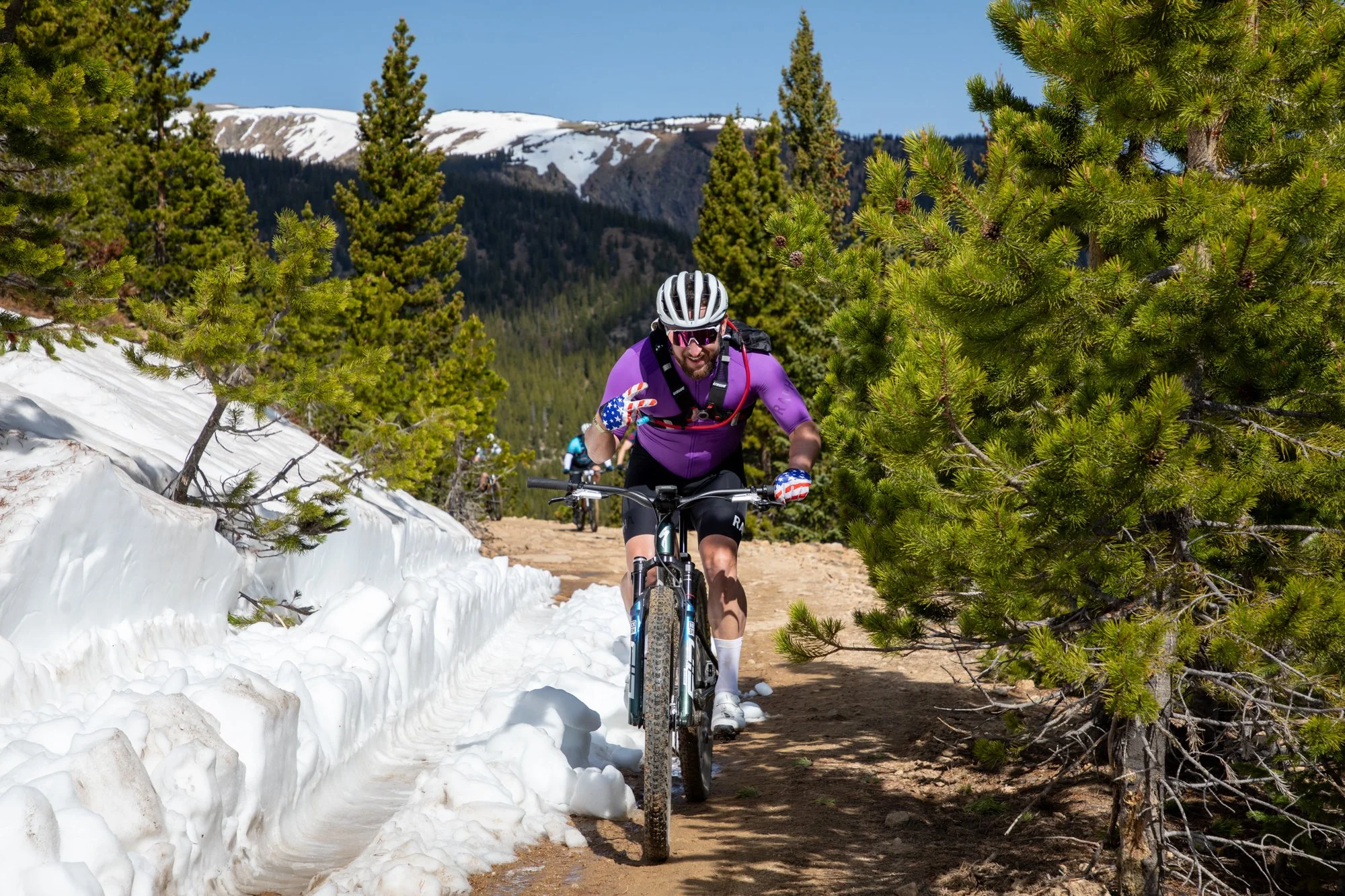
Finishing the Leadville Trail 100 MTB in under nine hours is one of mountain biking’s great amateur benchmarks. It earns the coveted big belt buckle, but more importantly, it represents a remarkably complete performance: fitness, pacing, nutrition, altitude management, technical competence, and race-day discipline all working together.
There is no single power number or training plan that guarantees a sub-nine finish. Leadville rewards riders who can produce steady power for an entire day while making very few mistakes. You do not have to ride like a professional. You do have to arrive prepared, remain patient, and keep moving.
Here is what that looks like.
Build Durability, Not Just a Big FTP
A high functional threshold power helps, particularly on Leadville’s long climbs, but FTP is only part of the equation. The more important question is how much power you can produce after six or seven hours at altitude.
Many successful sub-nine riders have a sea-level FTP somewhere around 3.5 to 4.0 watts per kilogram. That is a useful reference, not an admission standard. Larger riders may succeed with a lower power-to-weight ratio by taking advantage of their absolute power on faster terrain. Smaller riders may climb efficiently but struggle to contribute in groups on the flats.
Your training should therefore develop three qualities:
Sustainable climbing power
Fatigue resistance over six to nine hours
The ability to keep eating and riding late in the day
A solid preparation typically includes consistent aerobic volume, one weekly threshold or sweet-spot session, long climbing efforts, and increasingly race-specific long rides. During the final build, include several rides of five to seven hours in which you practice your exact pacing and nutrition strategy.
Back-to-back endurance days can also be valuable. They teach you to ride smoothly on tired legs without requiring an eight-hour epic every weekend.
Respect the Altitude
Leadville begins above 10,000 feet, and the course climbs to approximately 12,500 feet at Columbine Mine. Even the lowest parts of the race are higher than many riders have ever trained.
At that elevation, your sustainable power will be lower than it is at sea level. Trying to force your normal numbers is an excellent way to detonate before the turnaround.
If possible, arrive early enough to acclimatize. The ideal schedule depends on the individual, but spending one to two weeks at altitude is considerably more useful than arriving two or three days beforehand. If a longer stay is impossible, some athletes prefer arriving shortly before the race rather than spending several uncomfortable days in the middle of the adaptation process.
Regardless of your travel schedule, establish altitude-adjusted power targets. Ride the opening climbs by feel as well as by power. Your breathing should remain controlled, and you should never feel as though you are doing a short cross-country race.
The first rule of going sub-nine is simple: do not race the first two hours as if Leadville ends at Twin Lakes.
Know Your Splits, but Don’t Chase Them Recklessly
Course details can change from year to year, so always build your final pacing plan from the current athlete guide. On the traditional course, however, a rider targeting 8:45 to 8:59 might use approximate benchmarks like these:
Twin Lakes outbound: 3:00–3:15
Columbine turnaround: 4:25–4:35
Twin Lakes inbound: 5:05–5:20
Pipeline inbound: 6:20–6:40
Carter Summit inbound: 8:00–8:15
Finish: 8:45–8:59
Columbine in roughly four and a half hours is the key landmark. It leaves enough time for the return journey without requiring a heroic negative split.
Treat these times as guardrails rather than commands. If congestion, wind, or poor trail conditions cost you several minutes, do not immediately attack to recover them. Aggressive surges usually cost more time later than they save now.
Start under control, ride efficiently through the middle of the race, and increase the effort only when you are confident that your legs and stomach remain dependable.
Use Other Riders
Leadville contains long stretches where cooperation matters. Riding alone into a headwind can quietly consume the energy you will need on the final climbs.
Find groups moving at an appropriate pace. Stay attentive, maintain a safe wheel, and take reasonable turns when conditions allow. The goal is not to hide all day; it is to avoid wasting energy.
Corral position can affect this strategy. Riders starting farther back may encounter congestion on early climbs and narrow sections. Pass decisively when space is available, but do not repeatedly sprint between groups. A few minutes lost early are survivable. A series of anaerobic efforts at 10,000 feet may not be.
Fuel From the Beginning
A sub-nine attempt requires approximately a full workday of continuous exercise. Your stored carbohydrate cannot cover that demand.
Most riders should target roughly 80 to 100 grams of carbohydrate per hour, assuming that amount has been tested in training. Begin eating during the first hour and continue on schedule, even when you feel good. By the time hunger arrives, the problem has already started.
Fluid requirements vary with temperature, body size, and sweat rate, but approximately 600 to 900 milliliters per hour is a reasonable starting range. Sodium should be individualized rather than copied from another rider’s plan.
Simple systems usually work best. Bottles containing carbohydrate mix, supplemented with gels, chews, or familiar solid food, make intake easy to track. Use alarms or course landmarks as reminders if necessary.
Columbine deserves special attention. Eating can become difficult during the upper climb, so take in fuel before the gradient steepens. After the descent, resume eating immediately. That is when many riders unintentionally fall behind.
Never introduce a new product, concentration, or nutrition strategy on race morning.
Make Your Aid Stations Fast
You do not need to ride nine hours to finish in nine hours. You need to combine your moving time and every stop into less than nine hours.
Five leisurely aid-station visits can erase an otherwise successful ride. Arrange bottles and food so each stop is a rapid exchange. Know what you need before you arrive. If you have a crew, rehearse the handoff and give them written instructions.
Unless you are solving a genuine problem, an aid station should take seconds rather than minutes. A good target is fewer than five to eight total stationary minutes across the race.
Keep moving whenever practical. Soft-pedal while eating. Adjust clothing on a gentle section. Handle small tasks without turning them into complete stops.
Choose Reliability Over Novelty
Leadville favors a light, efficient cross-country mountain bike with fast-rolling tires and gearing low enough for steep climbing on tired legs. Both hardtails and short-travel full-suspension bikes can be successful.
Reliability matters more than saving the final few grams. Use tires with enough protection for your weight and riding style. Start with fresh brake pads, a serviced drivetrain, and sealant that has been checked recently. Carry the equipment required to repair a puncture, insert a tube, fix a broken chain, and inflate a tire.
Your bike, shoes, hydration system, and clothing should all be familiar. Race week is not the time to discover that your new saddle becomes unbearable after five hours.
Save Something for the Return
The ride to Columbine is only the setup. The race for a sub-nine finish begins after Twin Lakes inbound, when the excitement of the turnaround has faded and accumulated fatigue becomes obvious.
This is where durability and discipline pay off. Continue fueling, keep your cadence comfortable, and focus on steady forward motion. Do not evaluate the entire remaining distance at once. Ride to the next climb, the next aid station, or the next group.
If you paced correctly, the final hours will still hurt. The difference is that you will be tired and functional rather than depleted and unraveling.
A sub-nine Leadville is rarely perfect. You may walk part of a steep pitch, miss a bottle handoff, lose a group, or spend several minutes behind traffic. Success comes from responding calmly instead of turning one small problem into three larger ones.
Train the ability to ride hard for a long time. Acclimatize as well as your schedule permits. Fuel before you feel hungry. Stay out of the wind, move efficiently through aid stations, and refuse to race beyond your limits in the opening hours.
Reach Twin Lakes feeling better than expected. Crest Columbine around four and a half hours. Then ride the final miles like every saved watt and every swallowed carbohydrate has been preparing you for that moment.
That is what a sub-nine Leadville looks like. Enjoy the ride and Happy Training!