
Fueling the Gut — Optimal Performance and Recovery Require Glutamine
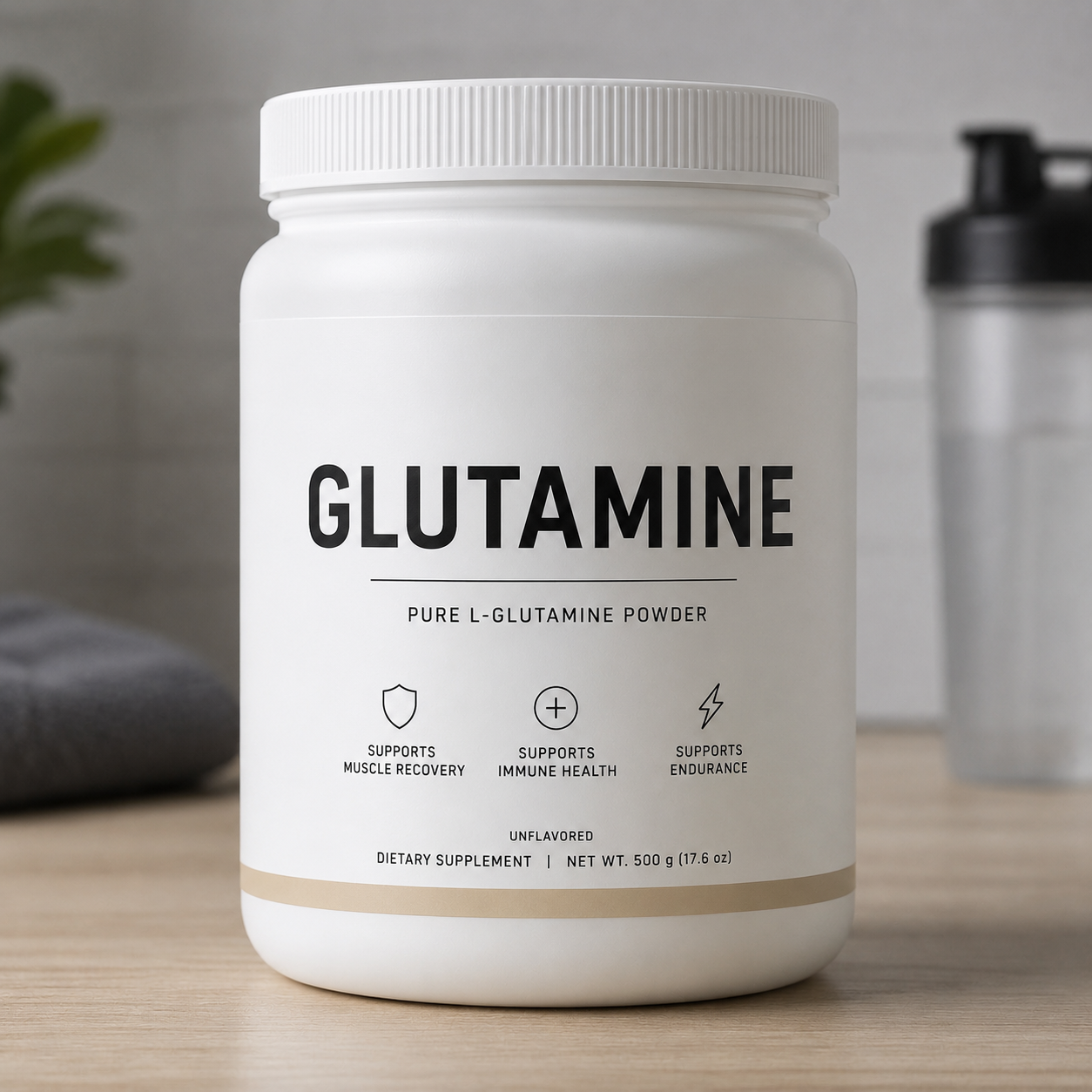
You've dialed in your carbohydrate timing. You've optimized your electrolytes. You've built a post-ride recovery meal protocol. But there's a layer of exercise nutrition most athletes have never considered — fueling the gut wall itself during hard efforts to prevent the cascade of events that makes you sick after your biggest training days and races.
That nutrient is glutamine. And the evidence behind it is more compelling than almost anything else in the endurance nutrition toolkit for one specific and critical purpose: keeping lipopolysaccharide (LPS) inside your gut where it belongs.
The Problem: Your Gut Wall Is Starving During Hard Exercise
During prolonged endurance exercise, blood flow to the gastrointestinal tract drops dramatically — research shows gut blood flow can fall by as much as 80% during intense sustained effort (Qamar and Read, 1987). This ischemia starves the intestinal epithelial cells — enterocytes — that form the physical barrier between your gut contents and your bloodstream.
Enterocytes have an unusual metabolic profile. Unlike most cells in the body that run primarily on glucose, enterocytes use glutamine as their primary fuel source. Glutamine provides the energy for tight junction protein maintenance, cell turnover, and barrier integrity. Without adequate glutamine, enterocytes cannot maintain the tight junction proteins — claudin, occludin, and zonula occludens-1 (ZO-1) — that keep the gut barrier sealed.
Plasma glutamine levels drop 20-30% after prolonged exercise as muscle tissue consumes glutamine for energy and gluconeogenesis (Newsholme et al., 2011). This depletion occurs at exactly the same moment gut ischemia is already stressing the barrier. Two simultaneous hits — no blood flow and no fuel — on the cells responsible for keeping your gut contents out of your bloodstream.
The result is increased intestinal permeability. And what leaks through when that barrier loosens is what triggers everything that follows.
What Leaks Through — And Why It Makes You Feel Sick
Lipopolysaccharide (LPS) is a component of the outer membrane of gram-negative bacteria that live normally and harmlessly in your gut. They are supposed to stay there. When tight junction integrity is compromised, LPS translocates through the loosened barrier into systemic circulation.
Once in circulation, LPS is recognized by toll-like receptor 4 (TLR4) on immune cells throughout the body. TLR4 activation initiates the same inflammatory cascade triggered by actual bacterial infection — because evolutionarily speaking, LPS in the bloodstream meant exactly that. The cascade releases interleukin-6 (IL-6), interleukin-1 beta (IL-1β), and tumor necrosis factor alpha (TNF-alpha), producing what researchers call sickness behavior — fatigue, appetite suppression, cognitive fog, malaise, and the flu-like feeling that athletes commonly experience in the days following their hardest efforts (Dantzer et al., 2008).
Additionally, LPS activates NADPH oxidase in immune cells, generating superoxide as a primary reactive oxygen species that further drives NF-kB activation and amplifies the inflammatory signal (Bedard and Krause, 2007). The entire cascade — from leaky gut to feeling genuinely sick — begins with glutamine-depleted enterocytes failing to maintain tight junction integrity during exercise.
Glutamine supplementation interrupts this cascade at the very first step.
The Evidence: What the Research Actually Shows
Zuhl et al. (2014) published in the Journal of the International Society of Sports Nutrition demonstrated that glutamine supplementation significantly reduced intestinal permeability markers — measured by lactulose/mannitol ratio — in runners following a hard effort compared to placebo. This is direct evidence of barrier protection during exercise stress, not just mechanistic theory.
Pugh et al. (2017) in the European Journal of Applied Physiology showed that acute glutamine supplementation taken before exercise attenuated exercise-induced gut permeability increases. Pre-exercise dosing specifically protective during the effort itself — before the ischemia begins, not just in recovery afterward.
Coeffier et al. (2010) in Clinical Nutrition demonstrated that glutamine maintains tight junction protein expression — specifically ZO-1 and claudin-1 — under inflammatory and stress conditions. This is the mechanistic foundation: glutamine directly supports the proteins that keep the barrier closed when stress is highest.
Newsholme et al. (2011) established glutamine as conditionally essential during catabolic stress — surgery, infection, and hard exercise — when endogenous production cannot meet demand. This paper established the depletion mechanism that makes supplementation relevant for athletes specifically.
Hasebe and colleagues across multiple publications demonstrated that glutamine reduces LPS-induced intestinal permeability and bacterial translocation, with the mechanism involving heat shock protein 70 (HSP70) upregulation in gut epithelial cells. HSP70 specifically preserves tight junction protein localization during ischemic and inflammatory stress — exactly the conditions of prolonged hard exercise.
The HSP70 mechanism deserves particular attention. Glutamine upregulates this cellular stress protector in enterocytes during exercise itself — not just in recovery. This means glutamine taken before a hard effort creates an active protective response in gut epithelial cells that operates during the effort, maintaining barrier integrity while blood flow is reduced and ischemic stress is highest.
Why This Matters More Than the Post-Race Nutrition Window
Most exercise nutrition guidance focuses on what you eat after a hard effort. The post-race nutrition window is real and important — but glutamine's primary value is upstream of that, during the effort itself.
The gut barrier begins loosening within the first 60-90 minutes of sustained hard effort as blood flow drops and glutamine levels fall. By the time you finish a two-hour-plus effort, your gut permeability is already significantly elevated. Everything you eat in the post-race window — clean or not — is entering through a barrier that has already been compromised for hours.
Glutamine supplementation before and during the effort keeps enterocytes fueled throughout, maintaining tight junction integrity during the ischemic window rather than attempting to repair damage after it has already occurred. This is a fundamentally different and more upstream intervention than anything in the post-race nutrition protocol.
The analogy is fortifying a wall before the storm rather than patching holes after it. Both matter. But the pre-storm fortification changes what the storm can do.
The Exercise Profile That Creates Maximum Risk
Glutamine depletion and permeability risk scale with effort duration and intensity. The athletes most vulnerable are those doing:
Efforts over 90 minutes — the threshold where plasma glutamine depletion becomes clinically significant
High intensity sustained work — greater metabolic demand on muscle accelerates glutamine consumption
Hot weather exercise — heat stress independently increases gut permeability through thermal effects on tight junction proteins
Back-to-back training days — inadequate recovery between sessions compounds glutamine depletion
Races with significant nutritional stress — ultramarathons, long triathlons, gravel centuries
A 2 hour effort in summer heat sits squarely in the maximum risk category. Two-plus hours of sustained effort, significant heat stress, substantial glycogen and glutamine depletion — the gut barrier is maximally compromised by the finish line. What happens in the subsequent hours determines whether that permeability window opens briefly and closes cleanly, or stays open long enough to trigger a full systemic inflammatory response.
How Glutamine Compares to Other Gut Support Interventions
Several compounds support gut barrier integrity and recovery. Understanding where each fits helps build a coherent protocol rather than an unfocused supplement pile.
Glutamine works primarily during exercise as enterocyte fuel. Most protective in the acute exercise window. Prevents the permeability increase before it occurs.
Curcumin works in recovery, directly upregulating claudin and ZO-1 expression during the repair phase. Meriva phytosome formulation has 29x greater bioavailability than standard curcumin and is the research-supported form.
N-Acetylcysteine (NAC) works in recovery, supporting glutathione synthesis in gut epithelial cells, reducing oxidative stress that impairs tight junction reassembly. Also directly mucolytic if respiratory symptoms develop from gut-lung axis activation.
Zinc supports epithelial cell regeneration and turnover during the repair phase.
Probiotics and prebiotic fiber work over weeks to build microbiome resilience — the longer-term foundation that determines baseline gut barrier strength going into any hard effort.
Gotu kola (Centella asiatica) has demonstrated direct tight junction protein upregulation and is particularly useful in the acute recovery window.
The most complete protocol uses glutamine before and during hard efforts to prevent permeability, then NAC, curcumin, zinc, and gotu kola in the recovery window to repair what permeability did occur despite prevention efforts.
Prevention first. Repair second. Most athletes only do the repair — and many don't even do that.
Practical Protocol for Endurance Athletes
The research supports a specific dosing protocol that maps cleanly onto a typical training or race day.
Morning of a long effort (2+ hours):
10-15g glutamine with breakfast, 2-3 hours before the start. This tops up plasma glutamine levels going into the effort so depletion during exercise starts from a higher baseline.
Pre-effort (30 minutes before):
10g glutamine. Creates elevated plasma levels at the start of gut ischemia onset, extending the protective window into the early phase of exercise when blood flow is already dropping.
During effort (over 90 minutes):
5g per hour mixed into your hydration bottle alongside your regular carbohydrate and electrolyte fuel. Replaces glutamine being consumed by working muscle in real time, maintaining plasma levels throughout rather than allowing progressive depletion.
Immediately post-effort:
10-15g glutamine before any food. The gut barrier is maximally compromised in the immediate post-exercise window — this dose supports rapid tight junction repair before the recovery meal arrives.
Then the recovery meal:
Clean protein and carbohydrate within 60-90 minutes of finishing, eaten only after genuine hunger returns — the biological signal that parasympathetic tone has been restored and the gut is ready to receive food properly.
Recovery supplement stack:
NAC 600mg twice daily, curcumin (Meriva form) twice daily, zinc, and ongoing probiotics through the recovery period.
The Honest Caveat
The most compelling glutamine research exists in clinical populations — surgical patients, critical illness, severe burns — where the evidence for gut barrier protection is very strong and consistently replicated. The exercise-specific research is solid and mechanistically coherent but smaller in scale than the clinical literature.
What is not in dispute is the mechanism: enterocytes run on glutamine, exercise depletes plasma glutamine, depletion impairs tight junction maintenance, impaired tight junctions allow LPS translocation, LPS translocation triggers the inflammatory cascade that produces post-exercise illness. Each step in that chain is well established. Supplementation to prevent the first step is mechanistically logical and supported by direct exercise research even where large-scale athlete RCTs are still being built.
The risk profile of glutamine supplementation at these doses is essentially zero. It is a conditionally essential amino acid already present in food and the body. The potential upside — preventing the cascade that produces days of post-race illness — is significant.
For endurance athletes doing consistent hard efforts, glutamine belongs in the pre-ride protocol alongside carbohydrates and electrolytes. It is fueling the gut wall, not just the working muscles. And in the context of preventing post-exercise inflammatory illness, it may be the most targeted single intervention available.
References
Bedard, K., and Krause, K.H. (2007). The NOX family of ROS-generating NADPH oxidases: physiology and pathophysiology. Physiological Reviews, 87(1), 245-313.
Coeffier, M., et al. (2010). Influence of glutamine on intestinal tight junction proteins and their regulators. Clinical Nutrition, 29(6), 754-760.
Costa, R.J.S., et al. (2017). Gut-barrier function during prolonged exercise and its relationship to exercise intensity. American Journal of Physiology — Gastrointestinal and Liver Physiology.
Dantzer, R., et al. (2008). From inflammation to sickness and depression: when the immune system subjugates the brain. Nature Reviews Neuroscience, 9(1), 46-56.
Hasebe, M., et al. Multiple publications on glutamine, HSP70, and intestinal barrier protection. Nutritional and pharmacological research series.
Newsholme, P., et al. (2011). Glutamine metabolism by lymphocytes, macrophages, and neutrophils: its importance in health and disease. Journal of Nutritional Biochemistry, 10(6), 316-324.
Pugh, J.N., et al. (2017). Glutamine supplementation reduces markers of intestinal permeability during running in the heat in a dose-dependent manner. European Journal of Applied Physiology, 117(12), 2569-2577.
Qamar, M.I., and Read, A.E. (1987). Effects of exercise on mesenteric blood flow in man. Gut, 28(5), 583-587.
Zuhl, M., et al. (2014). The effects of acute oral glutamine supplementation on exercise-induced gastrointestinal permeability and heat shock protein expression in peripheral blood mononuclear cells. Cell Stress and Chaperones, 20(1), 85-93.