
Schisandra: The Ancient Adaptogen Athletes Are Rediscovering
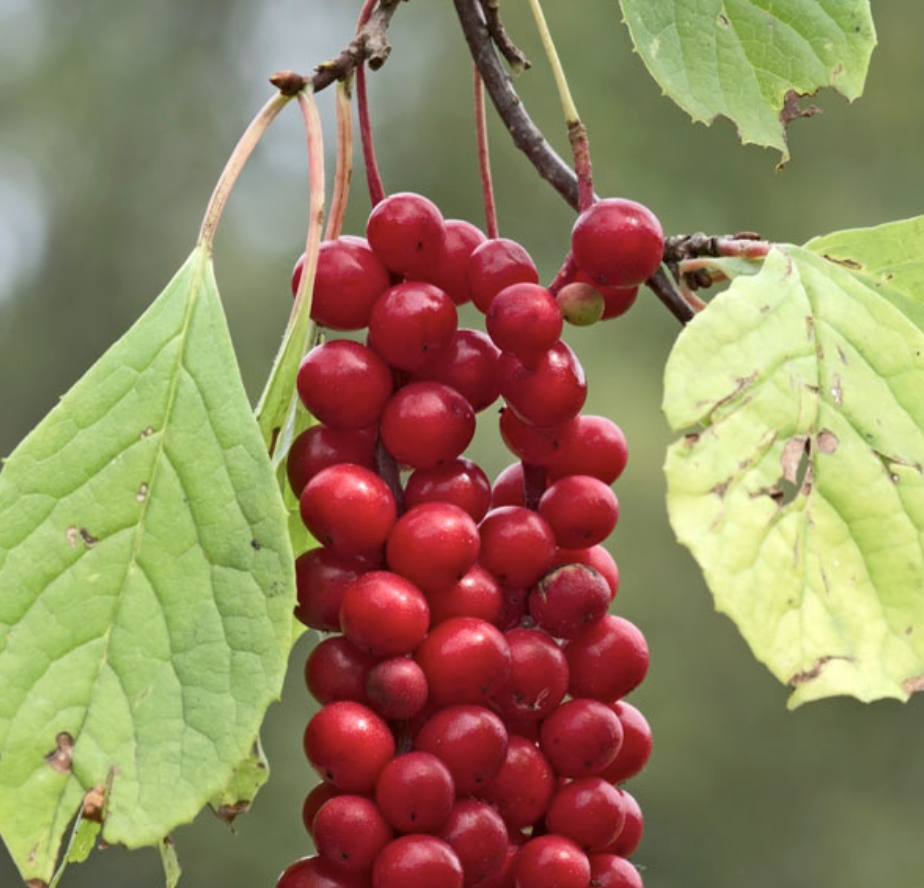
There's a small, tart red berry growing on vines across eastern Asia that has been quietly earning the respect of researchers, coaches, and performance-minded athletes. Schisandra chinensis — known in Traditional Chinese Medicine as wu wei zi, or "five flavor fruit" — is one of the most intriguing adaptogens in the natural world. And while it may not have the name recognition of ashwagandha or rhodiola, the evidence behind it is growing.
What Is Schisandra?
Schisandra is a woody climbing vine native to China, Russia, and Korea. Its deep red berries are harvested in the fall and have been used medicinally for over 2,000 years — originally to support the lungs, liver, and kidneys, improve endurance, and combat fatigue. Russian researchers took particular interest in it during the Soviet era, studying it extensively as part of the military's and space program's search for natural performance enhancers.
The berries earn their "five flavor" name by genuinely hitting all five taste profiles at once: sour, sweet, salty, bitter, and pungent. In TCM, this was interpreted as the herb nourishing all five organ systems. Modern science now understands this complexity through its chemistry — particularly a class of compounds called lignans, including schisandrin A, B, and C, which are responsible for most of its pharmacological effects.
What the Research Says
Schisandra falls squarely into the adaptogen category, meaning it helps the body maintain equilibrium under physical and psychological stress. One of the most compelling studies in an athletic context involved 71 athletes in a placebo-controlled, double-blind trial measuring stress responses to heavy physical exercise. Athletes taking schisandra-based adaptogens showed increased physical performance compared to placebo, and notably, supplementation blunted the cortisol and nitric oxide spikes typically triggered by intense exertion (Panossian et al., Phytomedicine, 1999).
On the muscular side, a 2020 randomized, double-blind, placebo-controlled trial published in International Journal of Environmental Research and Public Health found that 1,000 mg of SC extract daily over 12 weeks led to significant improvements in quadriceps muscle strength and reduced resting lactate levels compared to placebo (Park, Han, & Park, 2020). A follow-up 2021 study in the American Journal of Clinical Nutrition found that schisandra combined with low-intensity exercise improved muscle mass in older adults, pointing toward potential anabolic and anti-atrophy mechanisms (Cho et al., 2021).
Liver support is perhaps schisandra's most evidence-backed benefit. Its lignans appear to protect liver cells by activating enzymes responsible for producing glutathione — one of the body's primary antioxidants — while also reducing inflammatory signaling (The Naturopathic Herbalist, citing multiple preclinical studies). For athletes, this matters: the liver is a metabolic hub for glycogen storage, detoxification of metabolic byproducts, and processing post-exercise inflammation.
A 2022 pharmacological network analysis published on PubMed (PMC8843844) identified eight bioactive compounds in schisandra and mapped their interactions with human gene targets, concluding that the herb has strong theoretical and empirical grounds as an exercise supplement — particularly for its antioxidant, anti-inflammatory, and mitochondria-protective effects.
Why Athletes Should Pay Attention
The case for schisandra in an athletic context comes down to a few key mechanisms:
Cortisol modulation. Chronically elevated cortisol breaks down muscle, impairs sleep quality, and blunts recovery. Schisandra appears to buffer the HPA axis stress response, potentially helping athletes who train hard day after day avoid the hormonal cost of overreaching.
Lactate clearance. Reduced resting lactate — as seen in the Park et al. 2020 trial — suggests improved metabolic efficiency. Lower lactate at rest means your baseline is cleaner going into a hard session.
Mitochondrial and liver support. Protecting mitochondria from oxidative damage and supporting liver detoxification are both relevant to how quickly you recover between efforts and how cleanly you burn fuel during them.
Nitric oxide dynamics. The 1999 Armenian trial noted that schisandra supplementation normalized nitric oxide responses to exercise — a physiologically meaningful finding given NO's role in vasodilation and oxygen delivery.
This is the one I personally use - https://a.co/d/040RMLCm
Practical Considerations
Standardized dry extracts (typically to 9% schisandrins) in capsule form are the most bioavailable option, as the active lignans are poorly water-soluble. Typical research doses range from 500 mg to 2 g per day. It's generally considered safe and non-toxic at standard doses, with mild GI upset being the most commonly reported side effect.
One important caveat: schisandra is metabolized via the liver's CYP450 enzyme pathways, meaning it may interact with certain medications. Consult a physician before adding it to your stack if you're on any prescriptions.
Traditional history, the mechanistic plausibility, and the emerging controlled trials all point in the same direction. For endurance athletes, mountain bikers, trail runners, or anyone training under repeated physical stress, schisandra is one of the more interesting natural tools worth investigating.
Sources: Panossian et al., Phytomedicine (1999); Park, Han & Park, Int J Environ Res Public Health (2020); Cho et al., Am J Clin Nutr (2021); PMC8843844 (2022); Amir et al., Health Sciences Review (2023).