
Knee Valgus: When the Glutes Go Quiet and Everything Downstream Pays the Price
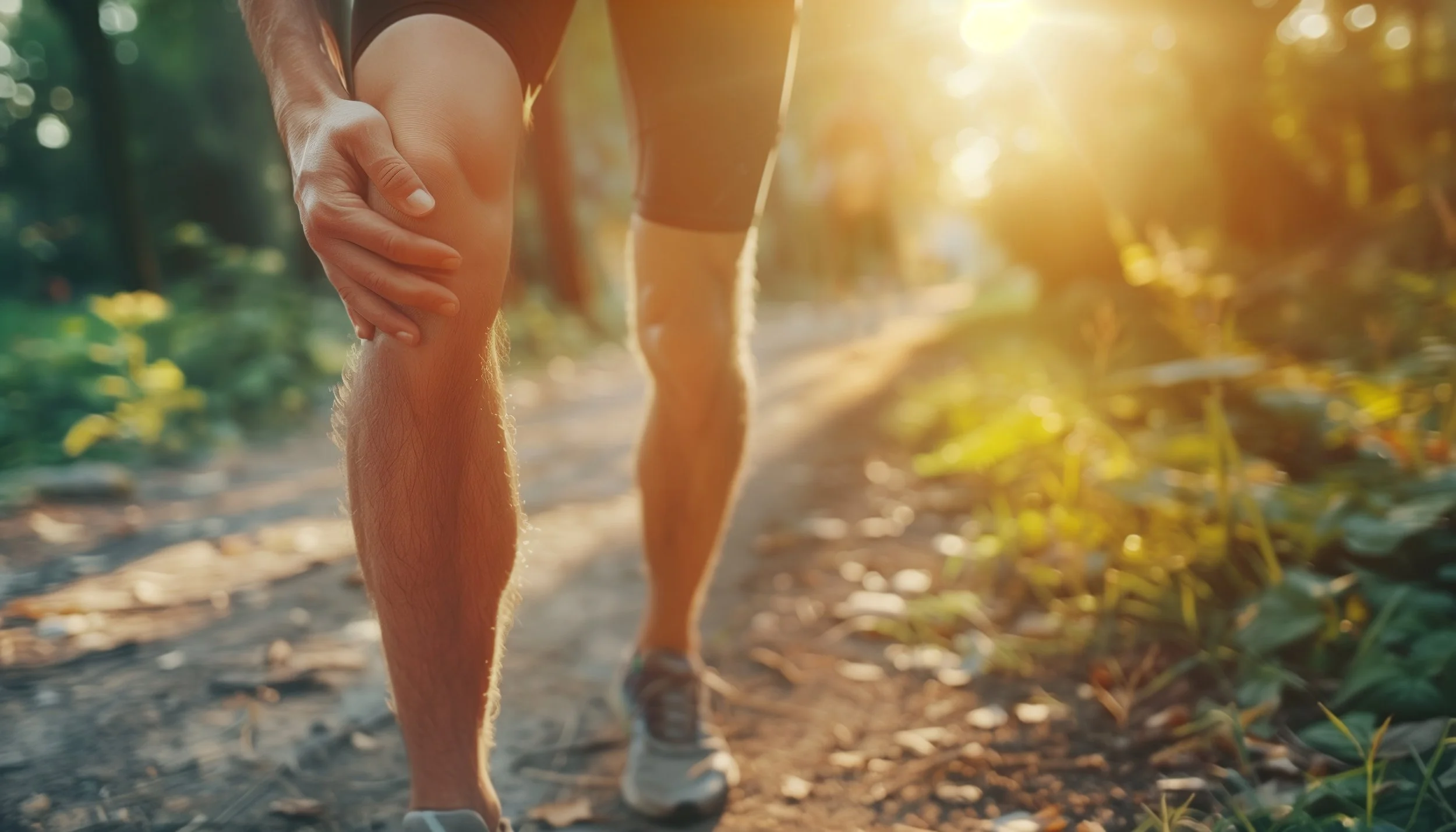
Working with endurance athletes, I tend to see the same pattern over and over: knees drifting inward under load, hips collapsing, feet rolling in. Knee valgus isn’t just an “ugly movement.” It’s a signal. Most of the time, it’s telling us the glutes are under-performing and the body is finding stability somewhere else.
And that “somewhere else” usually breaks down since it’s not designed to handle the load.
The silent role of the glutes
Your glute med and glute max are primary stabilizers of the femur. They control hip internal rotation and adduction. When they fire well, the thigh stays centered, the knee tracks forward, and force travels cleanly into the ground or the pedal.
When they don’t? The femur dives inward. The knee follows. The foot scrambles to adapt.
That’s knee valgus.
In cycling, this often shows up as knees brushing the top tube or drifting inward on the power phase. In running, it’s visible as the knee collapsing toward midline during stance, especially when fatigue sets in.
Collapsed arches: the first compensation
When the femur internally rotates and the knee moves inward, the tibia follows. The foot responds by pronating harder to keep you upright.
Over time, this excessive pronation can:
Flatten the medial arch
Overload the plantar fascia
Increase stress on the posterior tibialis tendon
Reduce stiffness of the foot as a lever
Now your “spring” becomes a sponge.
For runners, this means less energy return and more tissue strain. For cyclists, it means poorer force transfer into the pedal and increased stress at the ankle and knee.
Orthotics may prop things up temporarily, but they don’t solve the upstream problem: poor hip control.
Knee pain is rarely a knee problem
The knee is a hinge joint trapped between two rotating systems: the hip and the foot.
With valgus collapse, several things happen:
The patella is pulled laterally, increasing patellofemoral stress
The IT band experiences higher tension
The medial knee structures get compressed
The lateral knee structures get overstretched
This is where classic complaints show up:
“Runner’s knee” (patellofemoral pain)
IT band syndrome
Medial joint line irritation
Pes anserine pain
Cyclists often feel it as a deep ache around or behind the kneecap, especially during long threshold or climbing efforts when fatigue shuts the glutes down even more.
Hip and back pain: the chain reaction
When glutes don’t stabilize, the pelvis starts to move excessively in the frontal plane. That means:
More hip drop
More lumbar side-bending
More rotation through the SI region
Over thousands of steps or pedal strokes, this becomes:
Lateral hip pain or tendinopathy
Piriformis irritation
SI joint stiffness
Low-back tightness that never quite resolves
The body is trying to generate power from a position it cannot stabilize.
Performance suffers before injuries appear
One of the cruel parts of knee valgus is that it often precedes pain by months or years.
But performance already takes a hit:
Reduced force application efficiency
Lower running economy
More wasted motion
Earlier fatigue in long sessions
Difficulty holding form late in races or long rides
You don’t just get injured more easily—you become slower for the same effort.
The real fix: earn stability, don’t brace it
This isn’t about “squeezing your glutes” consciously while running or riding.
It’s about:
Restoring hip abduction and external rotation strength
Training frontal-plane control
Integrating single-leg stability
Building endurance in the glute med, not just max
Teaching the nervous system to default to the hips for control
When the glutes do their job, the knee tracks cleanly. The foot becomes springy again. Pain often fades—not because you treated the knee, but because you stopped abusing it.
As a coach, I see knee valgus as feedback, not failure.
It’s the body saying: “I need better support upstream.”
Listen early, and you save a lot of miles—and joints—down the road.
Add these to your daily routine and support your hip-knee connection: https://www.jsperformancelab.com/correctives
Happy training,
Joe